
Introduction
Why media coverage matters for brand visibility and authority
Media coverage gives a brand public proof of relevance. Readers trust established publications because editorial standards are higher than brand-owned content. A feature in a respected outlet can strengthen reputation, support search visibility, and influence buying decisions. Founders, marketers, and agencies use this exposure to build authority in competitive markets.
Strong coverage also supports SEO goals. Mentions and links from trusted news sites can help a brand earn referral traffic and high-authority backlinks. Many teams use an AI journalist outreach tool to improve this process because manual pitching often leads to missed deadlines, weak targeting, and low response rates. A clear media coverage strategy helps brands reach journalists with useful insights instead of broad promotional messages.
How an AI journalist outreach tool simplifies modern PR outreach
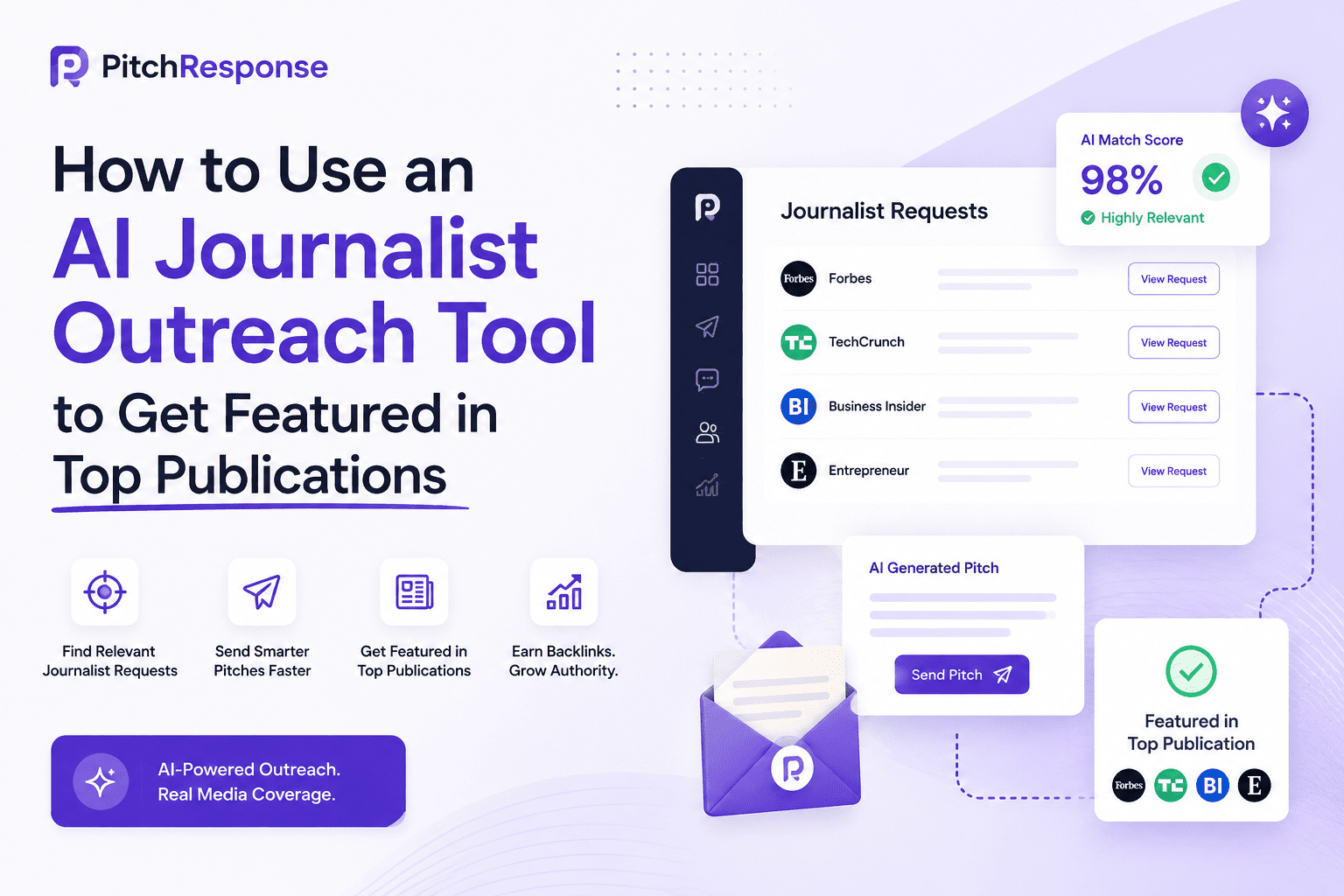
Traditional HARO-style workflows require constant monitoring, fast filtering, and rapid replies. That process takes time and often creates inconsistency. An AI journalist outreach tool reduces that friction by identifying relevant journalist requests, organizing opportunities, and helping users draft stronger responses. It works as a PR outreach tool, journalist outreach platform, and media outreach tool in one system.
Teams also use an AI PR tool for PR outreach automation. That improves speed, which matters because journalists often choose the first strong response they receive. A modern HARO alternative helps users manage digital PR outreach with better targeting and less manual work. Pitch Response fits this need by helping users respond faster and with more precision.
What readers will learn about getting featured in top publications
Readers will learn how an AI journalist outreach tool supports faster, more accurate pitching. They will understand how to get featured in top publications by matching expertise to active media requests, improving pitch quality, and sending responses at the right time. They will also see why a focused media coverage strategy can help brands get backlinks from journalists and grow authority over time.
The article explains the role of a PR outreach tool in daily media relations, the value of a journalist outreach platform for targeting, and the practical advantage of a HARO alternative built for speed. It shows how a media outreach tool and AI PR tool can support consistent digital PR outreach without unnecessary complexity.
Understanding What an AI Journalist Outreach Tool Does
An AI journalist outreach tool helps teams find media opportunities, match them to the right spokesperson, and send stronger pitches with less manual work. It supports digital PR outreach by scanning journalist requests, publication data, beat history, response patterns, and topic relevance. A strong journalist outreach platform reduces guesswork. It gives users a clear path to how to get featured in top publications through faster targeting and better message quality.
Traditional workflows often depend on inbox digging, spreadsheets, and broad media lists. An AI journalist outreach tool replaces that with structured search, filtering, and recommendation systems. It acts as a PR outreach tool and media outreach tool in one place. Many brands now use this type of AI PR tool as a HARO alternative because it saves time and improves precision. Pitch Response fits this need with a modern system built for PR outreach automation and daily media coverage strategy.
How the tool identifies relevant journalists and publications
An AI journalist outreach tool reviews keywords, publication categories, article history, journalist beats, request language, and audience fit. It compares a brand’s expertise with active opportunities. This process helps users avoid poor matches. A founder in fintech needs finance reporters, not general lifestyle writers. A SaaS company needs editors who cover startups, growth, or B2B software.
The best media outreach tool also ranks opportunities by relevance, authority, and likely response value. It can surface journalists who regularly quote experts, accept contributed insights, or request data-driven commentary. This sharpens digital PR outreach and helps users get backlinks from journalists through more accurate targeting.
Ways AI helps personalize pitches at scale
Personalization matters in every PR outreach tool. AI can analyze a journalist’s recent articles, preferred topics, tone, and format. It can then suggest tailored openings, stronger subject lines, and tighter responses. An AI journalist outreach tool gives teams a way to send many pitches without sounding generic.
It also helps structure responses around expertise, proof, and relevance. This improves media coverage strategy. It supports PR outreach automation while keeping messages useful and specific.
Key features to look for in an AI journalist outreach tool
The right journalist outreach platform should include real-time opportunity discovery, AI-assisted pitch drafting, journalist and publication filters, response tracking, and collaboration tools. It should support fast action, clear organization, and measurable outreach results.
Users should also look for source matching, publication quality signals, search by niche, and workflow features that make it a practical HARO alternative. Pitch Response stands out as an AI journalist outreach tool built for speed, relevance, and consistent PR execution.
Preparing Your Story Before Using an AI Journalist Outreach Tool
Strong media outreach starts with a clear story package. An AI journalist outreach tool can improve speed, targeting, and response quality, but it cannot fix a weak angle or missing proof. A founder, marketer, or PR team needs a story that serves a journalist’s deadline, audience, and editorial standards. That preparation increases the value of any PR outreach tool, journalist outreach platform, or media outreach tool.
Defining a newsworthy angle that fits media expectations
A newsworthy angle gives a journalist a reason to care now. The story needs relevance, timeliness, and a clear benefit to readers. Product updates alone rarely earn coverage. Stronger angles include original data, market shifts, customer behavior, expert insight, funding milestones, new research, and responses to current industry changes. This approach supports a practical media coverage strategy and improves results from digital PR outreach.
A team should write one main angle in a single sentence. That sentence should state what happened, why it matters, and who it affects. They should remove vague claims and promotional language. Journalists expect facts, specificity, and usable insight. An AI journalist outreach tool works best when the source gives it precise inputs. That leads to sharper pitches and better matches than outdated HARO alternative workflows.
Gathering brand assets, expert quotes, and supporting data
Preparation should include a complete source file. It should contain the company boilerplate, spokesperson bios, headshots, product screenshots, logos, website links, and contact details. It should also include approved expert quotes that sound natural and direct. A quote should add a clear opinion, not repeat a headline. This makes PR outreach automation more effective and reduces delays during fast-moving media opportunities.
Supporting data matters. Journalists trust numbers that come from internal studies, customer trends, public datasets, and credible third-party research. Every stat should have a source and date. Teams that want to get backlinks from journalists need evidence that stands up to editorial review. An AI PR tool can organize these materials, but accuracy still depends on the brand.
Matching your story to the right audience and publication type
Every outlet serves a different reader. Trade publications want industry detail. National media want broader relevance. Startup blogs may value founder insight. Local press may focus on community impact. A team should map the story to the right audience before using an AI journalist outreach tool. That improves targeting, helps users understand how to get featured in top publications, and makes a PR outreach tool more efficient.
They should also match the format to the outlet. Some journalists want data-led commentary. Others want case studies, trend predictions, or fast expert reactions. A strong journalist outreach platform helps identify those patterns. Pitch Response supports this process by helping users sort opportunities, shape responses, and act quickly with a modern HARO alternative built for accurate media targeting.
Using an AI Journalist Outreach Tool to Build a Targeted Media List
A targeted media list improves pitch quality, reply rates, and placement potential. An AI journalist outreach tool helps teams build that list with current data instead of old spreadsheets. It scans journalist profiles, article history, outlet focus, and contact changes. That process supports a stronger media coverage strategy and reduces wasted effort.
Pitch Response works as a journalist outreach platform built for speed and accuracy. It helps users sort contacts by relevance, not guesswork. That makes it useful as a HARO alternative for brands, agencies, founders, and PR teams that want a practical media outreach tool. The value comes from fit. A precise list gives every pitch a better chance to earn attention, trust, and coverage.
Filtering journalists by beat, outlet, and recent coverage
An AI journalist outreach tool should filter journalists by beat first. Reporters cover specific subjects such as startups, health, finance, SaaS, ecommerce, or cybersecurity. A strong PR outreach tool lets users search those beats and narrow results by publication type, region, audience, and authority. That creates a cleaner list for digital PR outreach.
Recent coverage matters just as much. Journalists change focus often. A reporter who covered marketing last year may write about venture funding now. An AI PR tool reviews fresh articles and tags current themes. Users can check outlet names, article dates, headline topics, and story angles before outreach begins. That step strengthens PR outreach automation and helps users get backlinks from journalists through relevant pitches.
Finding the best contacts for your niche or industry
The best contacts match the company’s niche, product type, and expertise. An AI journalist outreach tool can group journalists by industry keywords and publication interest. A startup founder in fintech needs different contacts than a wellness brand or B2B software company. Pitch Response helps users find those matches fast and supports how to get featured in top publications with better targeting.
A useful journalist outreach platform also shows which outlets publish expert commentary, trend analysis, product insights, or original data. That helps users choose contacts who are more likely to need their input.
Avoiding irrelevant outreach that hurts response rates
Irrelevant outreach damages trust. Journalists ignore pitches that miss their beat, audience, or format. A media outreach tool reduces that risk by filtering out weak matches. Users should remove outdated contacts, broad lists, and writers with no history in the topic. Better targeting leads to cleaner outreach, stronger open rates, and more consistent results from a PR outreach tool.
Crafting Strong Pitches With an AI Journalist Outreach Tool
A strong pitch gives journalists a clear reason to reply. An effective AI journalist outreach tool helps teams build that pitch with speed, structure, and relevance. It can surface the right angle, organize source points, and reduce weak phrasing. It also supports a more disciplined media coverage strategy. That matters for brands that want to know how to get featured in top publications without wasting time on broad outreach.
Pitch quality affects response rates more than volume alone. A solid PR outreach tool can identify journalist needs, map them to expertise, and help shape concise responses. This process improves digital PR outreach and supports PR outreach automation without removing human judgment. A modern journalist outreach platform also works as a practical HARO alternative for teams that need faster workflows and better targeting.
Writing subject lines that improve open rates
Subject lines should be direct, specific, and useful. An AI journalist outreach tool can test wording patterns based on publication type, beat, and query intent. Strong subject lines often include the topic, the source credential, or the data point offered. They avoid vague terms, clickbait, and filler.
Examples include: expert comment on retail pricing data, CTO source for cloud security story, or local housing data for metro business desk. A media outreach tool can suggest cleaner options and remove unnecessary words. This gives reporters immediate context and helps a pitch stand out in a crowded inbox.
Creating personalized email pitches that feel human
Personalization should reflect the journalist’s beat, recent coverage, and current request. An AI PR tool can analyze these details and draft a relevant message. The final email still needs a human review. Names, facts, and tone must be accurate. The best outreach sounds informed, calm, and useful.
Each pitch should open with the exact reason the source fits the story. It should then add one or two credible insights, a short bio line, and a clear offer for follow-up. This method helps brands get backlinks from journalists and strengthens trust.
Tailoring your message for national publications, trade media, and local outlets
Different outlets need different framing. National publications want timely insights, original data, and broad relevance. Trade media values technical depth and industry experience. Local outlets respond well to regional impact, community expertise, and practical examples.
An AI journalist outreach tool supports this adaptation at scale. It can reshape the same core idea for each outlet type while keeping the message accurate. That makes it a stronger PR outreach tool and media outreach tool for teams that need efficient outreach with publication-specific relevance.
Following Up and Managing Outreach Campaign Performance
A strong follow-up process protects relationships and improves results. An AI journalist outreach tool gives teams a clear view of sent pitches, response timing, and contact history. That structure helps them manage outreach with more discipline. It also reduces guesswork across digital PR outreach, especially for brands that need a repeatable media coverage strategy.
Many teams send a pitch and wait too long. Others follow up too often and damage trust. A reliable PR outreach tool helps them set contact rules, group journalists by publication, and monitor reply patterns. That makes the outreach process more consistent and easier to improve over time. It also supports PR outreach automation without removing human judgment.
When to follow up without overwhelming journalists
Most journalists do not need repeated reminders. One follow-up after the initial pitch is often enough. A second follow-up can work for time-sensitive requests or high-fit opportunities. An AI journalist outreach tool helps users time each message based on request deadlines, publication urgency, and prior engagement.
Teams should keep follow-ups short. They should add value, not pressure. A useful follow-up may include a stronger quote, a fresh data point, or a clearer subject line. A journalist outreach platform can flag inactive threads and help users avoid duplicate outreach. That matters for anyone who wants to know how to get featured in top publications without harming future opportunities.
Tracking opens, replies, placements, and missed opportunities
Performance tracking shows what actually drives media wins. A media outreach tool should record open rates, reply rates, accepted pitches, live placements, and backlinks earned. It should also show missed opportunities, such as late responses, poor targeting, or unanswered high-authority requests. That data is essential for teams that want to get backlinks from journalists in a reliable way.
Pitch Response, as an AI PR tool and HARO alternative, helps users review outreach performance with practical detail. They can compare response rates by industry, journalist, pitch angle, and send time. That gives founders, marketers, and agencies a clearer standard for outreach quality.
Using campaign insights to improve future media outreach
Campaign data should shape the next round of outreach. Teams can identify which topics earn replies, which publications convert into placements, and which pitch formats fail. An AI journalist outreach tool turns that information into smarter targeting and faster decision-making.
They can refine templates, improve personalization, and focus on journalists who respond to their expertise. That makes each campaign stronger. A modern journalist outreach platform gives users a measurable advantage over manual workflows and outdated HARO alternative processes.
Common Mistakes to Avoid When Using an AI Journalist Outreach Tool
Sending generic pitches that lack relevance
A common failure with an AI journalist outreach tool starts with poor targeting. They send the same pitch to many journalists and expect strong results. That approach lowers reply rates and harms credibility. Journalists look for direct relevance, clear expertise, and useful information. A generic message does not meet those standards.
An effective AI journalist outreach tool should help users match each request to the right source, topic, and publication. A strong pitch references the journalist’s query, adds a specific insight, and explains why the source fits the story. That is how a PR outreach tool supports a better media coverage strategy. It improves precision, not volume alone.
Teams that want to know how to get featured in top publications should treat personalization as a core requirement. A journalist outreach platform can surface relevant opportunities fast, yet the final message still needs a clear angle. The best digital PR outreach focuses on facts, short quotes, data points, and expert perspective. That method gives a media outreach tool real value.
Relying on automation without editorial judgment
Automation saves time, though blind automation creates weak outreach. They may use an AI PR tool to draft responses, select contacts, and manage PR outreach automation. The risk appears when no one reviews tone, claims, accuracy, or fit. A fast response helps, but accuracy and relevance decide whether a journalist trusts the source.
A reliable AI journalist outreach tool works best with human review. Editors, founders, marketers, and agency teams should check every pitch for clarity and factual support. They should remove filler, vague claims, and empty promotional language. This matters even more for users replacing old workflows with a HARO alternative. Speed alone does not earn coverage.
A strong journalist outreach platform supports judgment with filters, query matching, and organized tracking. It should not replace expertise. A media outreach tool can help users get backlinks from journalists, yet those links usually come from useful answers, not automated volume.
Ignoring relationship building after securing coverage
Some users stop after one mention or backlink. That is a missed opportunity. A single feature can lead to future quotes, recurring requests, and stronger brand authority. An AI journalist outreach tool should support long-term relationship management, not only first contact.
They should thank the journalist, share the published piece, and stay available for future comments. That practice strengthens trust and improves future digital PR outreach. A PR outreach tool becomes more valuable when it supports follow-up, notes, and contact history. Consistent outreach helps users get featured in top publications more than once.
Pitch Response, as a modern HARO alternative, fits this process well when users combine speed with relevance, review, and follow-up. That balance turns an AI journalist outreach tool into a practical system for lasting media visibility.
Conclusion
An AI journalist outreach tool gives PR teams a practical advantage. It reduces manual research, shortens response time, and helps them find relevant requests with more precision. A strong journalist outreach platform also improves consistency across campaigns. Teams can manage more opportunities without lowering quality. That matters for brands that want steady visibility, stronger authority, and a better media coverage strategy.
Pitch Response fits this shift in modern digital PR outreach. It works as a faster HARO alternative and a more focused media outreach tool. It helps users respond to journalists, organize outreach, and improve the odds of media placement. That process supports a clear goal: how to get featured in top publications with less wasted effort.
How an AI journalist outreach tool can improve PR efficiency and results
An AI journalist outreach tool improves efficiency by handling tasks that usually slow PR work. It can surface relevant journalist requests, support draft creation, and help teams prioritize the best opportunities. That makes PR outreach automation useful for startups, agencies, and in-house marketers. They can send timely, relevant pitches at scale.
Better speed often leads to better results. Journalists work on tight deadlines. Early responses have a stronger chance of review. A capable AI PR tool also improves structure and clarity, which can raise reply quality. More relevant outreach can lead to more placements, stronger brand mentions, and more chances to get backlinks from journalists.
The importance of combining AI speed with a strong story angle
Speed alone does not win coverage. Journalists still choose sources with clear expertise, useful data, and a sharp point of view. An AI journalist outreach tool helps with timing and message quality, but the pitch still needs a strong story angle. It should answer the request directly and offer something specific that supports the article.
Effective teams use AI for efficiency and human judgment for relevance. That balance improves trust and helps a PR outreach tool produce stronger outcomes.
Next steps for earning consistent features in top publications
Brands that want repeat coverage should build a repeatable workflow. They should monitor journalist requests daily, respond fast, track performance, and refine their pitch style. A reliable journalist outreach platform makes that process easier to manage.
Pitch Response gives users a modern system for sustained PR outreach automation. It helps them act faster, pitch smarter, and pursue ongoing media opportunities. For teams that want a practical way to improve outreach and earn more features, it stands out as an effective AI journalist outreach tool.
